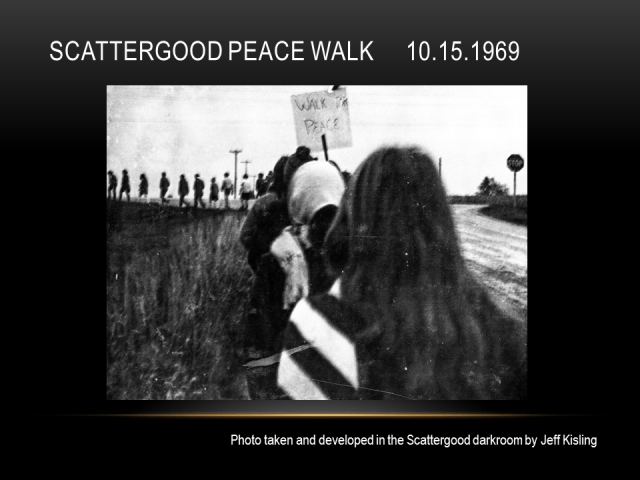
by Jeff Kisling
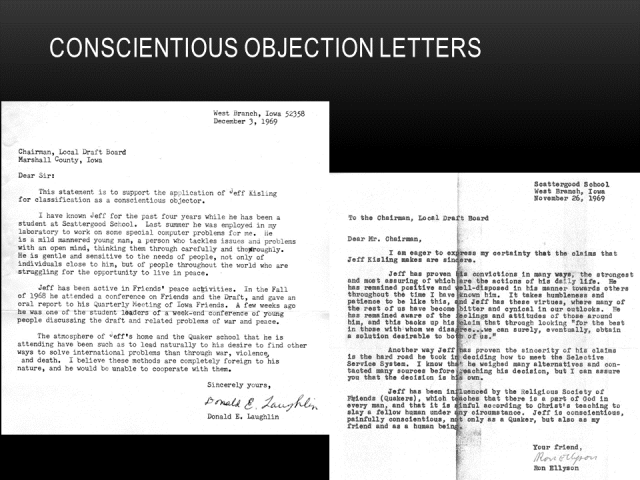
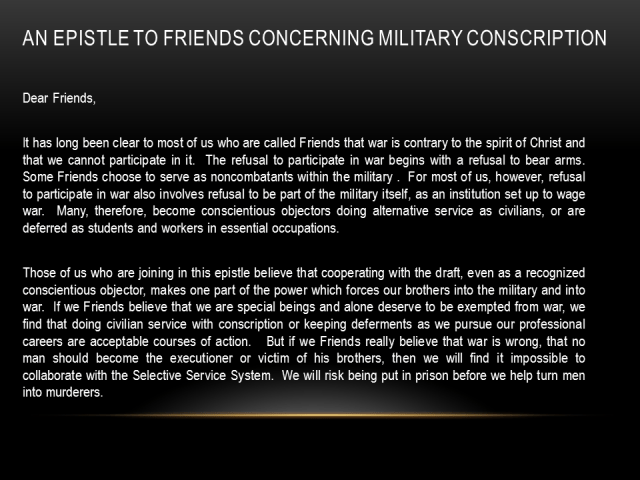
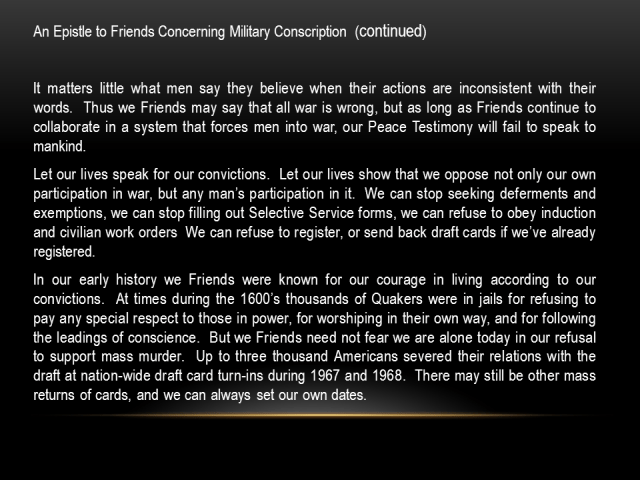
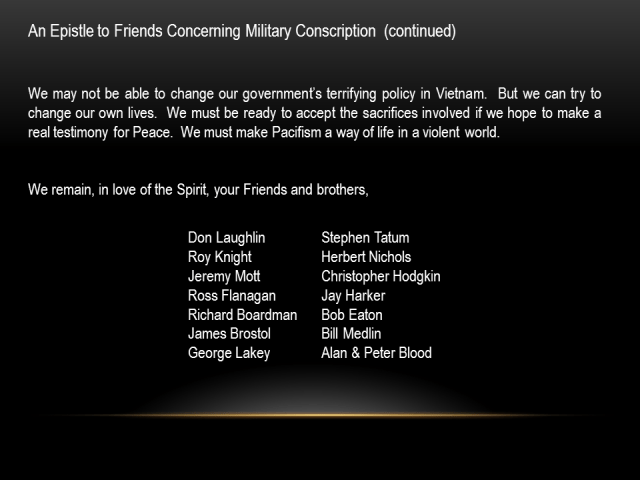
Don Laughlin and Roy Knight signed the Epistle to Friends Concerning Military Conscription.
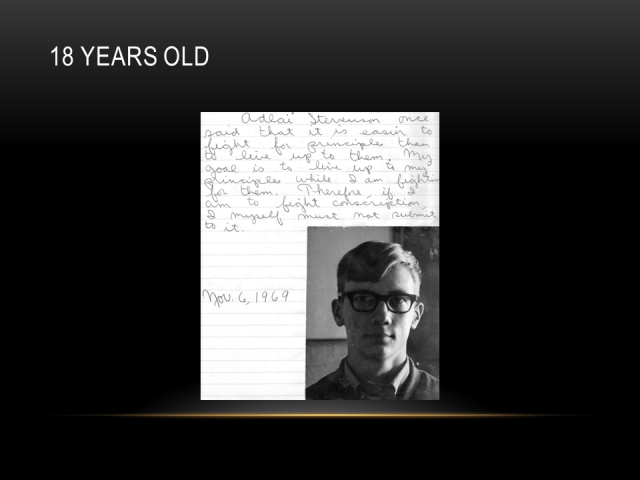
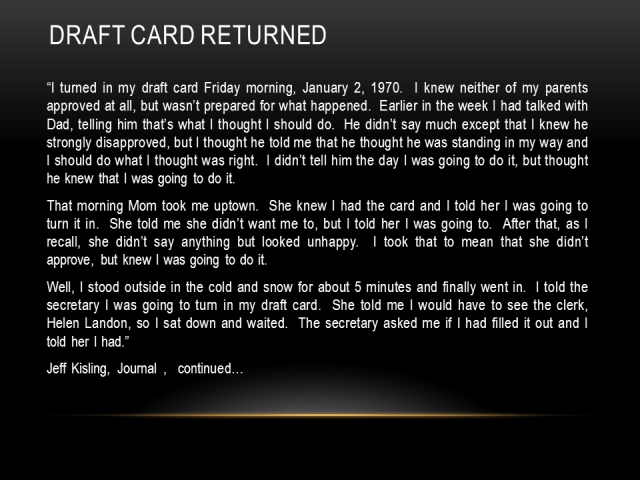
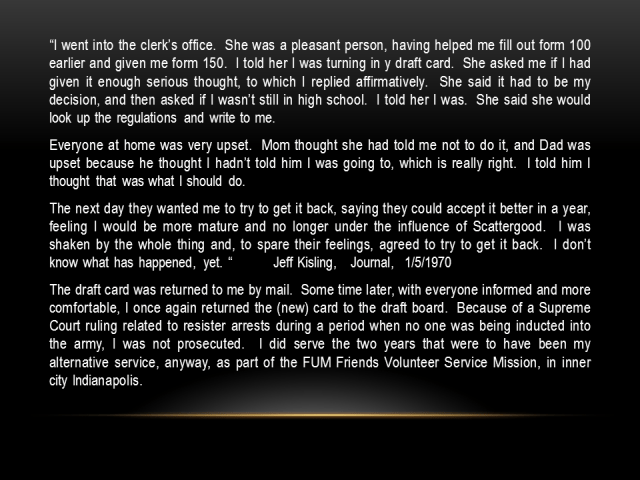
IMPORTANT NOTE: Below I include some quotations from the Journal I kept at the time. It was not correct when I wrote “I knew neither of my parents approved at all”. They both understood the issues very well. It was just personal concern for me and what I might experience in prison, and the lifelong consequences of a felony conviction that they were reacting to. I’m glad for Don Laughlin’s comment after this was published, and he is correct about my parent’s understanding. The real issue was I don’t think they understood at the time that however much I really didn’t want to go to prison, I was so strongly led to that decision that it would have been a burden the rest of my life to feel I had not lived according to my beliefs.
I’ll admit it was very sobering to realize, as I was thinking back about all of this, how different my life would have been if I had been convicted for draft resistance. It is almost certain I would not have had a career at Riley Hospital for Children, among other consequences. The societal consequences of a prison record are much worse today thanks to changing attitudes toward those who have been incarcerated.
There was another big part of this decision that I didn’t write about below. The men and their families who refused to cooperate with the Selective Service System were held in high regard for their decisions and sacrifices. I clearly remember thinking that if I made that decision, it had to be what I felt I was being led to do, not make it because of how it might look to others.
Looking back on it all now I find it humorous that I turned in my draft cards twice. But it wasn’t funny at the time, and shows these decisions often don’t come easily, and always affect more than the individual involved.
 Quaker Stories